This week I visit The Blake School which was established in 1900.
History of Singapore Math slides are available here.
Grade 3 Lesson was on subtraction with multiple regrouping. That was a basic skill lesson. Grade 4 Lesson was on looking for a pattern while calculating areas of polygons. That was a drill-and-practice lesson. Both are taught in a problem-solving approach.
Topics
- Lesson Structure, Three-Part Lesson Format, Anchor Task
- Planning Lesson - identifying essential understanding for lessons and learning to assess (runway-taking off-cruising analogy)
- Problem-Solving Approach
- Constructivism and other theories CPA Approach
- Visualization, Number Sense and Patterns
Photographs are available on my Facebook.
In the three-part lesson format, the lesson begins with the presentation of an anchor task (in Math in Focus it is the task in the Learn box; in Primary Mathematics, it is the un-numbered task; in My Pals Are Here! Maths, it is the one solved completely).
Features of Anchor Task
(1) Less is More - students are not solving a lot of problems. They are focused on only one (or a small number of related tasks). Student engagement with one task for an extended period of time allows ample learning opportunities for all (struggling learners get the time they need while advanced learners are made to go deeper and presented from going faster).
(2) Multiple Strategies - hopefully the book you use suggest multiple strategies. In any case, an essential step in planning lesson is to anticipate students' responses. Try to provide strategies that can support struggling students (more literal methods) and also challenge able students (more abstract, elegant(?) methods).
(3) Key Question - anchor task allows students to go back to key question again and again ... in the Grade 2 fraction lesson the key question is Are the parts equal? How can you tell?. In the Earlybird lesson, it was Are the things the same? Why do you say so?. In the Grade 4 open lesson, it was What's the area? Are you sure? Do you see a pattern?
This blog is about teacher professional development courses that I conduct in Singapore and other countries.
Showing posts sorted by relevance for query anchor task. Sort by date Show all posts
Thursday, June 13, 2013
Wednesday, December 3, 2014
Learning Tree - Shinglee Professional Development | Bangkok
Anchor Task 2 | Secondary Case Click Here
Seminar for School Leaders - How to Increase Achievement Level and Cultivate Positive Attitude in Mathematics in Your School. During the seminar I did two anchor task demonstrations to illustrate the factors contributing to high achievement and positive attitude. The photographs show using an anchor task from New Syllabus Mathematics 1, a secondary level textbook series that is used by many secondary schools in Singapore (it was first developed in the 1980s and the 2013 Edition is now available for Book 1, 2 and 3 as well as Additional Mathematics). In this anchor task, students were asked to investigate the sum of angles in a polygon of n sides. We saw exploring, structuring, journaling and reflecting using the textbook. We also discussed how guided practice looks like using Worked Example 6.
TIMSS Report 2011 Mathematics | Full Report
More to come ...
Friday, August 2, 2013
NSMSI Open Grade 5 Lesson in Westminster Colorado
Today I taught two open lessons to one group of 'volunteer' students (they gave up a day of their summer because their parents made them come; thanks, guys), Many did not know each other before today. This is the best option we have given that the conference was held during the summer break and yet we want to provide teachers with some opportunities to observe learning in action.
Lesson 1 was a problem-solving lesson on algebraic thinking designed to show teachers the implementation of anchor tasks. The anchor task for this lesson is taken from Primary Mathematics Grade 6 textbook for algebra but for the fifth graders, we did not move to formally writing expressions. The problem is to arrange five consecutive whole numbers in the arrangement seen in the photos such that the vertical sum and horizontal sum are equal. Students articulate the general pattern they saw using words. They saw several patterns. With little guidance, one student saw that "in a population, if there are more even numbers then the numbers in the middle are even". With some help a girl saw that one of the totals can be obtained by "times-ing 3".
It was gratifying to see a good student who started off using the procedure to get 3/8 got the conceptual idea during independent practice.
Lesson 1 was a problem-solving lesson on algebraic thinking designed to show teachers the implementation of anchor tasks. The anchor task for this lesson is taken from Primary Mathematics Grade 6 textbook for algebra but for the fifth graders, we did not move to formally writing expressions. The problem is to arrange five consecutive whole numbers in the arrangement seen in the photos such that the vertical sum and horizontal sum are equal. Students articulate the general pattern they saw using words. They saw several patterns. With little guidance, one student saw that "in a population, if there are more even numbers then the numbers in the middle are even". With some help a girl saw that one of the totals can be obtained by "times-ing 3".
| Anchor Task |
| Guided Practice |
Lesson 2 is the first lesson on finding 1/2 of 3/4. Students used paper folding to discuss the anchor task. Two main ideas emerged - halving the entire 3 fourths and halving each of the fourths.The focus today is to review a fraction of a whole number and using it to do say 1/2 of 6 eighths as 1/2 of 6 apples.
This open lesson is for teachers to study the three-part lesson format and differentiated instruction.
A student later articulated that what helped were (1) the paper and (2) the 'advice' which is essentially is instruction between desks or differentiated instruction - different kids got different advice based on their current level of understanding.
| Independent Practice |
Saturday, December 6, 2014
Anglo Singapore International School | Bangkok
Teachers Session | Click Here for a summary of the discussion on differentiated instruction using a common task.
We learn how to differentiate instruction using an open task as well as differentiated instruction using a basic skill practice tasks.
Make a list of strategies for advanced learners and a list of strategies to support struggling learners.
Three stages of a maths lesson. Four things teachers do to help acquisition and refinement of knowledge. Five things advanced children can do.
How does anchor task and guided practice promotes DI?
How does the use of a journal consistent with DI?
How is asking for more than one method a DI strategy?
How does concrete materials and visuals help?
How does the extended time with one task (anchor task) help?
How does collaborative learning help?
Parents Session | Click Here for two of my list of Big Fives.
Five things advanced children can do. Five core competencies in mathematics.
Wednesday, June 19, 2013
M4thodology Institute at The Bolles School (Grades 3-6 Session)
Photographs of the board and charts are available here.
Day 1
Opening Lecture on Role of Mathematics
Breakout Session 1 on Anchor Task (see notes below)
Day 2
General Session on Assessment
General Session on Challenging Word Problems - Problems used in the session is available. See for solutions to the eight problems for the session including the three homework problems.
General Session on Generalization and Links to Algebra
Breakout Sessions on Fraction, Ratio and Percent
The discussion on Fractions is here.
Day 3
General Session on Visualization
General Session on Questioning Strategies
There are also additional summary notes in the blog entry for the K-2 Institute.
Breakout Session on Multiplication and Division (see below)
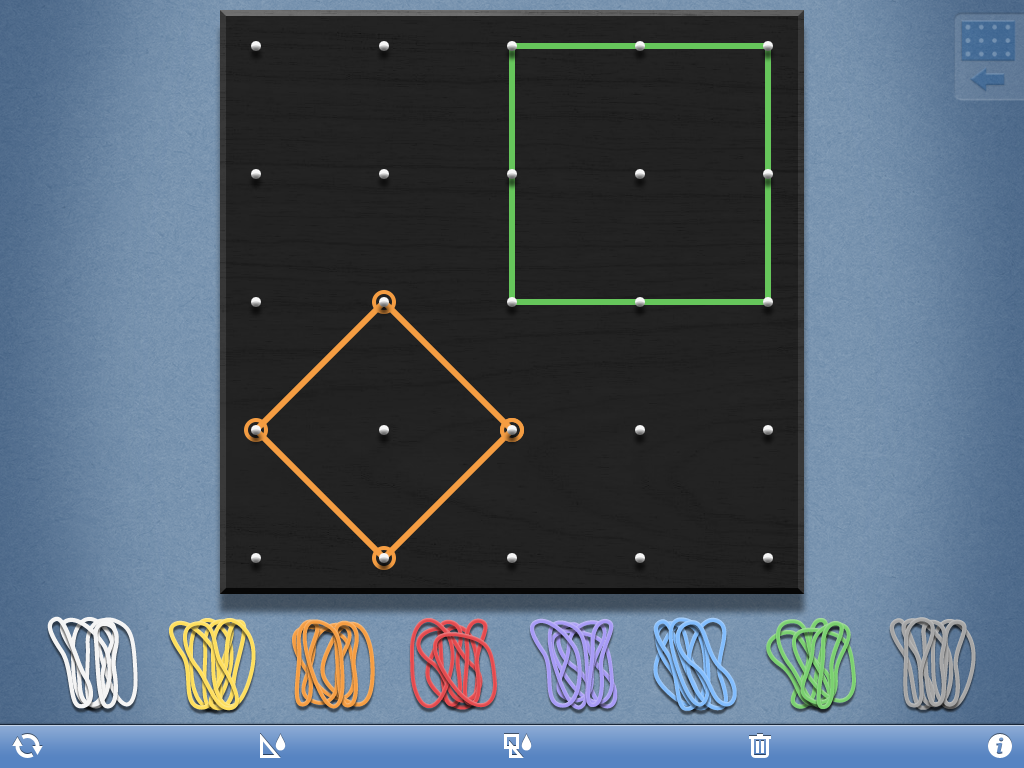
Breakout Session on Measurement and Area where we did one word problem lesson, one basic concept lesson (area of triangle) and one drill-and-practice lesson (based on Pick's Theorem on the geoboard grid).
In the Closing Forum, we look at the Japanese features of effective mathematics lesson (Shimizu, 2013). The slide is available in another blog entry.
Day 1
Opening Lecture on Role of Mathematics
Breakout Session 1 on Anchor Task (see notes below)
| Breakout Session on Anchor Task |
| Notes on Anchor Task Breakout Session |
Day 2
General Session on Assessment
General Session on Challenging Word Problems - Problems used in the session is available. See for solutions to the eight problems for the session including the three homework problems.
General Session on Generalization and Links to Algebra
Breakout Sessions on Fraction, Ratio and Percent
The discussion on Fractions is here.
| Problem for Ratio |
| Problem for Percentage Change |
General Session on Visualization
General Session on Questioning Strategies
There are also additional summary notes in the blog entry for the K-2 Institute.
Breakout Session on Multiplication and Division (see below)
Breakout Session on Measurement and Area where we did one word problem lesson, one basic concept lesson (area of triangle) and one drill-and-practice lesson (based on Pick's Theorem on the geoboard grid).
In the Closing Forum, we look at the Japanese features of effective mathematics lesson (Shimizu, 2013). The slide is available in another blog entry.
| Lesson to Develop Formula for Area of Triangle |
| Lesson to Apply (Measurement) |
| Lesson to Consolidate (Area) |
Monday, June 10, 2013
Math in Focus 3A - Planning Lesson, Choosing Anchor Tasks
One key step in planning lesson is the choice of anchor task - the one used for teaching. A good starting point is to look at the textbook and ask if the given task is a good one. Good tasks allow the attainment of learning outcomes and allow teachers to challenge advanced learners even as he takes care of the rest of the students.
Today we look at Math in Focus 3A Lesson 4.3 Subtraction with Regrouping. I was planning for a lesson I will be teaching to third graders at The Blake School in Hopkins, MN.
The main method (which is in the textbook) is to develop an understanding of the standard algorithm, which is essentially about regrouping / renaming a numbers to facilitate subtraction.
The alternate method (which is not in the book) is to get students to see 2,598 as 2,500 + 98 ... which make subtraction from 5,000 + 100 + (46) fairly straight forward. 46 can be put aside.
The choice of numbers in this anchor task allows for the alternate method (which teachers may get advanced students to think about) while letting the other students have ample time to master the main method.
The choice of numbers allows emphasis on doubles facts (4,000 - 2,000, 1,000 - 500 and 16 - 8).
It is important for teachers, in the lesson planning process to think about the choice of examples selected.
Grade 4 Lesson
Monday, March 2, 2015
Grade 3 Lesson on Fractions
Plan | I taught a 30-minute lesson based on this Put On Your Thinking Cap. I left Problem 1 and the Workbook Task for the next half an hour - Guided and Independent Practice.
For this lesson, I planned to use Problem 2 as the Anchor Task. The Anchor Task was - Here is a cake. (Students received a bar model cutout to represent the cake, cut into thirds) Nohair got 2-ninths. Spiky and Curly got the rest. How much if the cake did each of them get? Find as many ways as you can.
Compare this version to the one in the book. What's the difference, if any?
Differentiation for Struggling Learners - one condition was left out (Spiky got more than Curly). Also a concrete bar model was given to the students.
Differentiation for Advanced Learners - The bar model was cut into thirds so that students get to extend their solutions to cases such as 2/9 + 1/3 + 4/9. They are also encouraged to check if it is possible to include sixths or fifths.
Outcomes |
It was suggested that students use a table to organize their responses. They were later scaffolded to realize that they work systematically.
Friday, August 2, 2013
Professional Development at Island School
The course is on Problem-Solving Approach and CPA Approach.
Photographs are available here.
We discussed anchor task:
(1) extended time over one problem
(2) use of concrete materials
(3) collaborative format
Photographs are available here.
We discussed anchor task:
(1) extended time over one problem
(2) use of concrete materials
(3) collaborative format
| Anchor Task : Think about ways to do 32 - 19 |
Wednesday, October 26, 2011
Promise Academy Elementary School, New York
I visited a charter school in New York and taught Grade 2 and Grade 3 classes.
The lessons were both on addition. As the students are the midst of the textbooks, it was not possible for me to know which lessons they were at on the day of the open lesson, I decided to teach lessons which are based on addition but is not part of the textbook lessons.
The purpose of the open lesson is for teachers to understand the fundamenatals of Singapore mathematics curriculum - in particular the big ideas and the problem-solving approach.
In Grade 2, the anchor task is to arrange five consecutive numbers (initially 1-digit numbers and later where the sum is 3-digit)in a cross formation such that the verical sum equals the horizontal sum.
In Grade 3, the anchor task is to make the greatest possible sum (ABCD + EFG) using given digits 1, 2, 3, 4, 5, 7, 8. Sometimes conditions such as less than 500 are given. Another digit is added to make the greatest sum for ABCD + EFGH but the sum has to be less than 10 000.
I also gave a plenary session to parents and teachers at the end of the day.
This is the plenary presentation.
Promise Academy Elementary School
View more presentations from Jimmy Soon
Tuesday, November 8, 2016
Connecticut, USA | 8 November 2016
Farmington Public Schools
Singapore Math, as people call it, started as the government's initiative to improve mathematics learning of students who were not performing well. Hence, the provision of processing time, use of concrete materials and spiral approach are integral fundamentals of mathematics teaching and learning advocated by Singapore's curriculum.
Case Study 1 - we saw the unfolding of an anchor task taken from MiF.
This is a summary of the discussion.
Refer to http://3rteachertraining.com/ipad-apps-ban-har-uses/#more-2263 for links to these apps.
Case Study 2 - we looked at an anchor task from MiF. We discussed target method, accessible method and advanced method.
Case Study 3 - Example from Grade 9 Singapore Textbook.
Case Study on Long Division
Monday, March 9, 2015
March 9.10 | Connecticut (Greenwich Public Schools)
Slides are here.
We open with some international comparative achievement tests data.
For the Grades K-3 session, the morning was devoted to studying the complete lesson structure
1. Anchor Task
2. Journaling
3. Reflection
4. Guided Practice
5. Independent Practice
How does the first thirty minutes look like?
How do we do an Anchor Task based on a Learn in a textbook
We also see how to select one of the three Learns in a textbook and use the other two as Reflection.
In the afternoon we saw three models of teaching word problems including those that focuses on calculation and bar models.
Slides for Grades 4-8 Session are here.
We looked at the three-part lesson structure and the different ways to teach word problems - problem posing, rewrite word problems told orally in one' sown words, presenting. word problem sentence by sentence and modeling reading word problems - we saw examples of each.
Friday, April 15, 2016
Chicago, USA | 14.15 April 2016
Lesson Structure
- Anchor Task ~ we discussed how to bring anchor tasks to live and have a chance to work with grade level colleagues on how to craft anchor tasks
- Guided Practice ~ we discussed how variation is embedded in good practice
- Independent Practice
Friday, December 12, 2014
Greg Tang's Math Institute | Keynote Lectures 11.12 Dec 2014
Keynote on Anchor Tasks - What are anchor tasks? Why are they used? How can it be brought to life? Click Here
In this lecture we saw the original Singapore textbooks, where the three-part lesson format has already been established. Using a current textbook I showed how to bring an anchor task to life and how to use textbooks for reflection. I also showed how Guided Practice looks like.
Closing Keynote | Click Here
I presented for the first time a collection of my favourite list of fives - I have a set of seven lists.
Tuesday, February 24, 2015
February 24 | Penang
Students interacting to resolve a difficult point - one of them was one-sixth of three-fourths.
In this open lesson, we started with that anchor task and using the CPA Approach got the students to arrive at the final product.
They did a guided practice task - Abu ate one-third of a cake. Siti ate half of the remaining two-thirds.
The lesson ended with four to five practice computation.
SRK Dato Keramat | Penang Malaysia
Subscribe to:
Posts (Atom)